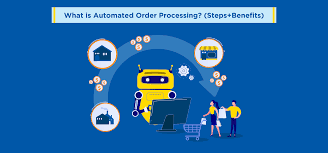
Automating order fulfillment involves using technology to manage the entire process from sale to delivery. This includes tasks like inventory management, order processing, picking, packing, and shipping. It aims to increase speed, accuracy, and efficiency while reducing manual labor and errors.
What is Order Fulfillment Automation?
Order fulfillment is the whole process of getting an order to your customer. It starts when someone buys something from you. Then it goes all the way to their doorstep. Automation means using tools and systems to do these steps faster. It also means doing them with fewer mistakes. Think of it as giving your fulfillment tasks a super-smart helper.
This helper doesn’t get tired. It doesn’t make typos. It follows rules perfectly every time. This is key for businesses that are growing. As sales go up, the number of orders goes up too. Doing it all by hand becomes too much. Automation helps you handle more orders without more stress. It’s about smart systems working for you.
Why Automate Order Fulfillment?
The main reason to automate is to save time and money. Manual tasks are slow. They also cost money in wages and mistakes. Think about a small error in an address. That order might go to the wrong place. You have to pay to reship it. That’s lost money and a unhappy customer. Automation cuts down on these errors.
Another big plus is speed. Customers want their orders fast. Automated systems can process orders very quickly. This means faster shipping. Faster shipping makes customers happy. Happy customers come back. They also tell others about your great service. This helps your business grow even more. It’s a cycle of good things.
The Many Steps in Order Fulfillment
Before we dive into automation, let’s break down the steps. This helps us see where the magic can happen. It’s a journey every order takes.
1. Order Placement
This is where it all begins. A customer buys something online. Or maybe in a physical store. Your system gets this order.
2. Order Processing
Your system checks the order details. It verifies payment. It makes sure everything looks right. This is a crucial step for accuracy. Sometimes this is called order validation.
3. Inventory Management
The system needs to know if the item is in stock. If it is, it reserves one for this order. If not, it flags the order. Good inventory tracking stops overselling.
4. Picking
Someone or something has to find the item. This happens in a warehouse. A worker or a robot goes to get the item.
5. Packing
The picked item is then put into a box or mailer. The right size box is used. Packing materials protect the item. A shipping label is added.
6. Shipping
The packed order is handed off to a carrier. This could be UPS, FedEx, USPS, or another service. Tracking information is generated.
7. Delivery
The carrier brings the package to the customer’s door. The order is complete.
8. Returns Management
Sometimes customers send items back. This process needs to be handled too. It’s part of the full cycle.
Order Fulfillment Stages & Automation Potential
- Order Placement: Integrate with e-commerce platforms (Shopify, Amazon, etc.).
- Order Processing: Automatic verification, fraud checks, and payment capture.
- Inventory Management: Real-time stock updates across all sales channels.
- Picking & Packing: Optimized routes, scan verification, automated packing machines.
- Shipping: Carrier rate shopping, label printing, tracking updates.
- Delivery: Automated notifications to customers.
- Returns: Online return portals, automated return label generation.
The Technology Behind Automation
Automating fulfillment isn’t magic. It relies on smart technology. These tools work together to make things happen smoothly.
One key piece is a Warehouse Management System (WMS). A WMS helps you manage your warehouse space. It tracks inventory in real-time. It tells workers where to find things. It can also guide them on the fastest picking routes. This saves tons of time.
Then there’s an Order Management System (OMS). An OMS handles orders from all your sales channels. It makes sure orders flow correctly. It syncs inventory across platforms. This stops you from selling something you don’t have. It’s a central hub for your sales.
Shipping software is also vital. This software connects to carriers. It helps you find the best shipping rates. It prints labels. It can even track packages automatically. This saves a lot of manual work at the shipping desk.
Key Technologies for Automated Fulfillment
Order Management System (OMS): Centralizes orders from all sales channels.
Warehouse Management System (WMS): Optimizes warehouse operations, inventory, and staff.
Shipping Software: Automates label printing, carrier selection, and tracking.
Inventory Management Software: Real-time stock tracking and reorder alerts.
Robotics & Automation Equipment: For picking, sorting, and packing in larger operations.
The Benefits of Automating Order Fulfillment
Let’s talk about what you gain. The benefits are pretty significant. They impact your bottom line and customer happiness.
First, Accuracy improves a lot. Humans make mistakes. Typos in addresses, wrong items picked, incorrect quantities. Automated systems use scanners and pre-set data. This means fewer errors. Fewer errors mean fewer returns and happier customers. This is a big win.
Second, Speed increases dramatically. Automated systems process orders much faster. Picking paths are optimized. Packing can be done quickly. Shipping labels are printed in seconds. This means orders get out the door faster. Customers get their items sooner. This builds loyalty.
Third, Cost Savings are real. While there’s an upfront investment, automation saves money long-term. It reduces the need for a large manual labor force. It cuts down on costs from errors and returns. It also allows you to handle more volume without proportional cost increases. This boosts profitability.
Fourth, Scalability becomes much easier. As your business grows, manual fulfillment gets harder. Automation lets you scale up easily. Your systems can handle more orders without breaking. This is crucial for sustained growth. You can handle peak seasons like holidays without as much stress.
Fifth, Customer Satisfaction goes way up. Faster, more accurate deliveries mean happy customers. They get what they ordered, when they expect it. Good delivery experience leads to repeat business and positive reviews. This is marketing gold.
Finally, it gives you Better Data and Insights. Automated systems collect a lot of data. You can see how long each step takes. You know your inventory levels. You can track shipping times. This data helps you make smarter business decisions. You can find bottlenecks and improve them.
Automation Benefits at a Glance
| Benefit | Impact |
|---|---|
| Increased Accuracy | Fewer picking and shipping errors. |
| Faster Processing | Quicker order turnaround and delivery. |
| Reduced Costs | Lower labor costs and fewer error-related expenses. |
| Improved Scalability | Easily handle increased order volumes. |
| Enhanced Customer Experience | Higher satisfaction and loyalty. |
| Valuable Insights | Better data for decision-making. |
My Own Experience with Fulfillment Woes
I remember when my small online shop first started taking off. It was thrilling! Orders were coming in faster than I could keep up with. I was still packing everything myself, late into the night, in my garage. The smell of cardboard and packing tape was my perfume. One Tuesday night, I was exhausted.
I had a rush order for a customer. They needed it by Friday for a gift. I grabbed the items, packed them up, and slapped on a shipping label. I must have been half asleep. I rushed it to the post office before they closed. Later that week, I got an angry email. The customer received the wrong item! My heart sank. I had grabbed the wrong color shirt from the shelf. It was a cheap mistake for me, but it felt huge to that customer. I had to apologize, send the right item, and refund their shipping. That mistake cost me money and, more importantly, a bit of trust. That’s when I knew I needed a better way. I needed to stop relying solely on my own tired hands.
Different Types of Fulfillment Systems
There isn’t just one way to automate. The best system for you depends on your business size and needs. Let’s look at a few options.
1. In-House Automation
This is when you set up automation within your own facility. You might invest in a WMS and OMS. You could also use conveyor belts or automated guided vehicles (AGVs) in a larger warehouse. This gives you maximum control. It’s good for businesses that have their own warehouse space and want full oversight.
The upside here is total control over your brand and processes. You can customize things exactly how you want. The downside is the cost and complexity. Setting up and maintaining these systems requires significant investment and expertise. It’s a big undertaking.
2. Third-Party Logistics (3PL) Providers
A 3PL company handles your fulfillment for you. They have warehouses, staff, and technology. You send them your inventory. They pick, pack, and ship orders for you. Many 3PLs use advanced automation themselves. This is a very popular option for growing businesses.
The main advantage of a 3PL is that you don’t have to build or manage the infrastructure. You leverage their expertise and existing systems. This lets you scale quickly. It can also be more cost-effective than building your own automation. The tradeoff is less direct control over the physical fulfillment process. You rely on the 3PL’s standards.
Choosing Your Fulfillment Path
In-House Automation:
- Best For: Larger businesses, those with strict control needs.
- Pros: Full control, customization, brand consistency.
- Cons: High upfront cost, complex management, requires expertise.
Third-Party Logistics (3PL):
- Best For: Growing businesses, e-commerce sellers, those wanting to outsource.
- Pros: Scalability, reduced overhead, access to advanced tech, expertise.
- Cons: Less direct control, potential integration challenges, ongoing fees.
When is Automating Order Fulfillment Right for You?
It’s not always the right move for every business. But there are clear signs that it’s time to consider it. How many orders are you getting a day? If it’s just a few, you’re probably fine. But if you’re seeing dozens, or hundreds, it’s a different story.
Are errors becoming common? Do you or your staff spend a lot of time fixing mistakes? Are customers complaining about delivery times or wrong items? These are red flags. They show that your current process is struggling to keep up.
Another indicator is growth. If your sales are climbing steadily, you need a system that can climb with you. A manual process will become a bottleneck. It will limit how much more you can sell. Think about peak seasons, like Black Friday or the holidays. Can your current system handle a surge of orders?
Also, consider your own time. Are you spending too much time packing boxes when you could be marketing, developing products, or talking to customers? If your time is better spent elsewhere, automation is a smart move. It frees you up to focus on growing the business strategy.
Signs It’s Time to Automate
- High Order Volume: Consistently 50+ orders per day.
- Frequent Errors: Picking, packing, or shipping mistakes are common.
- Slow Processing Times: Orders take too long to get ready for shipment.
- Customer Complaints: Issues with delivery speed or order accuracy.
- Growth Stagnation: Manual tasks are limiting your sales potential.
- Owner Burnout: You’re spending too much time on fulfillment tasks.
Real-World Impact: Stories of Automation Success
Let’s look at how this has helped other businesses. These aren’t just numbers; they are real companies making big changes.
Consider “Crafty Kits,” a small business selling DIY craft supplies. They started with handmade kits. As demand grew, they were overwhelmed. Their garage became a mess of yarn and glue. They switched to a 3PL. Suddenly, orders were processed within 24 hours. Customers were thrilled with the speed. Their return rate dropped significantly. The owners could finally focus on creating new kits.
Another example is “Tech Gadgets Inc.” They sell electronic accessories online. They invested in an in-house WMS and an automated picking system. Their warehouse staff now uses scanners that tell them exactly where to go. Picking accuracy went from 95% to 99.8%. Shipping times were cut in half. They could handle twice the order volume with the same staff size. This allowed them to expand their product line.
These stories show that automation isn’t just for big corporations. It’s a powerful tool for small and medium businesses too. It levels the playing field. It allows them to compete on service and speed.
Common Misconceptions About Automation
People often misunderstand what automation means. Let’s clear up some common myths.
Myth 1: Automation means firing all staff. This isn’t usually true. Automation often shifts roles. Instead of manual picking, staff might manage the automated systems. They might focus on quality checks or customer service. It’s more about making staff more efficient and productive. Your best people can do more valuable tasks.
Myth 2: It’s too expensive. While there’s an investment, the return is often significant. When you factor in the cost of errors, returns, and lost sales due to slow fulfillment, automation can pay for itself. Plus, 3PL options make it accessible without huge upfront costs.
Myth 3: It’s only for huge businesses. As we’ve seen, automation is scalable. There are solutions for businesses of all sizes. E-commerce platforms integrate with many automation tools. This makes it easier for smaller players.
Myth 4: It removes the human touch. Automation handles the repetitive, tedious tasks. This frees up your team to provide better customer support. It allows for more personalized communication. The focus shifts from manual labor to customer relationships.
Myth vs. Reality
Myth: Automation means job losses.
Reality: Often shifts roles to more valuable tasks.
Myth: It’s unaffordable.
Reality: Cost savings and ROI can be substantial.
Myth: Only for large corporations.
Reality: Scalable solutions exist for businesses of all sizes.
Myth: It’s impersonal.
Reality: Frees up staff for better customer interaction.
Implementing Automating Order Fulfillment
Ready to take the leap? Here’s a simple guide to getting started.
1. Assess Your Current Process: Understand where your pain points are. Track your order volume, error rates, and fulfillment times. Identify which steps take the most time or cause the most problems.
2. Define Your Goals: What do you want to achieve? Faster shipping? Fewer errors? Lower costs? Clear goals will guide your choices.
3. Research Solutions: Look into WMS, OMS, and shipping software. If considering a 3PL, research providers that fit your industry and needs. Get demos and ask questions.
4. Start Small (if possible): You don’t have to automate everything at once. You could start by automating your shipping label creation or inventory syncing. See how that goes.
5. Plan for Integration: Make sure the new systems can talk to your existing ones, like your e-commerce store. Smooth integration is key.
6. Train Your Team: If you’re automating in-house, ensure your staff knows how to use the new tools. If using a 3PL, understand their processes and communication methods.
7. Monitor and Adjust: Once implemented, keep an eye on your results. Are you meeting your goals? Make adjustments as needed. Automation is an ongoing process of improvement.
Your Automation Roadmap
Step 1: Analyze Needs
Step 2: Set Goals
Step 3: Explore Options (WMS, OMS, 3PL)
Step 4: Phased Implementation
Step 5: Ensure System Integration
Step 6: Team Training & Adoption
Step 7: Continuous Improvement
Future Trends in Order Fulfillment
The world of fulfillment keeps changing. What’s next? We’re seeing more advanced tech.
Robotics and AI: Robots are getting smarter and more common in warehouses. They can pick, sort, and even pack items. Artificial intelligence helps optimize routes and predict demand.
Same-Day Delivery: Customers want things faster than ever. Businesses are exploring ways to offer same-day or even faster delivery through micro-fulfillment centers and advanced logistics.
Sustainability: There’s a growing demand for eco-friendly packaging and shipping. Automation can help optimize packaging to reduce waste. It can also help consolidate shipments.
Personalization: While automation handles the heavy lifting, there’s still a desire for a personal touch. Companies are using technology to add personalized notes or special packaging options.
The goal is always to make the process faster, cheaper, and better for everyone. Technology is the key driver for these changes.
What This Means for Your Business
Embracing automation means a more efficient business. It means happier customers. It means you can handle more growth without getting overwhelmed. It frees up your valuable time. You can focus on the big picture. This helps your business become more competitive. It ensures you can meet customer expectations in today’s fast-paced market.
Frequently Asked Questions
What is the difference between an OMS and a WMS?
An Order Management System (OMS) focuses on managing orders from their entry to their fulfillment status across all sales channels. A Warehouse Management System (WMS) focuses on optimizing the operations within the warehouse, such as inventory tracking, labor management, and physical storage.
Can I automate fulfillment if I sell on multiple platforms like Amazon, Shopify, and eBay?
Yes, absolutely! This is one of the biggest benefits of automation. Systems like OMS are designed to integrate with multiple sales channels, pulling all orders into one place. This synchronizes inventory and ensures orders are processed correctly regardless of where they came from.
How much does automating order fulfillment cost?
Costs vary widely. For software, you might pay monthly subscription fees. For a 3PL, you’ll pay per order or based on storage and services. Investing in your own warehouse automation can involve significant upfront capital. It’s important to look at the return on investment (ROI) rather than just the initial cost.
Will automation make my business impersonal?
Not necessarily. Automation handles the repetitive, physical tasks. This frees up your human team to focus on customer service, personalized communication, and building relationships. The goal is to enhance the customer experience, not replace human connection.
How long does it take to implement an automated fulfillment system?
Implementation timelines differ. Simple software integrations might take days or weeks. Setting up a full WMS or moving to a 3PL can take several weeks to a few months. It depends on the complexity of your operations and the chosen solution.
What are the biggest risks of not automating order fulfillment?
The biggest risks include falling behind competitors, experiencing slow growth due to operational bottlenecks, increased errors leading to unhappy customers and lost revenue, and potential burnout for you and your team trying to keep up with manual processes.
Conclusion
Automating order fulfillment is a smart move for any business aiming for growth. It brings speed, accuracy, and efficiency. It helps you delight your customers. It allows you to focus on what you do best. Start exploring your options today. Make your order process work smarter, not harder.