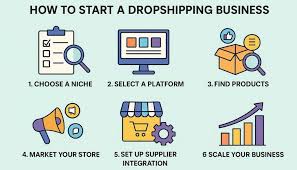
Scaling a dropshipping business means growing sales and revenue steadily without a proportional increase in costs or operational strain. It involves optimizing processes, reaching more customers, and building a sustainable brand. This article explores proven strategies for achieving that growth.
What Does It Mean to Scale a Dropshipping Business?
Scaling up means your business can handle more orders. It also means you make more profit from each order. This happens without everything falling apart.
Think of a small lemonade stand. It’s doing well. Scaling means opening more stands, or selling more lemonade at each stand.
It means more people buying your lemonade. Your costs might go up a little. But your profits should go up a lot more.
For dropshipping, scaling means selling more products. It means reaching more customers online. It means making more money.
But it’s not just about more sales. It’s about making those sales happen smoothly. It’s about keeping customers happy.
It’s about making sure your suppliers can keep up. Scaling is about smart growth. It’s about building something that lasts.
Why does this matter so much? Because many online stores just tread water. They get a few sales here and there.
They don’t build a real business. Scaling turns a hobby into a job. It can even turn a job into a full-time success.
It gives you more freedom. It lets you do what you love on a bigger stage. It means your hard work pays off more.
My Own Dropshipping Growth Struggles
I remember when my first store was just humming along. I was getting about five sales a day. It felt great!
I was making some money. But I wanted more. I wanted to quit my day job.
I tried adding more products. That just made things messy. My customer service emails piled up.
I spent hours on shipping questions. It felt like I was stuck.
One late night, I was staring at my sales numbers. They hadn’t moved much all week. I felt a bit of panic.
Was this it? Was this as big as it would get? I’d spent so much time.
I’d learned a lot. But I wasn’t seeing the big rewards. My supplier was getting slow too.
Sometimes orders took ages to ship. Customers were getting mad. I knew I had to change something big.
That’s when I realized I was trying to do everything. I was the marketer. I was the customer support.
I was the website manager. I was even trying to be the product researcher. It was too much for one person.
My business was suffering because I was suffering. I needed to get smarter. I needed to find ways to automate and delegate.
That struggle led me to the strategies I use today.
Key Pillars of Scaling Your Dropshipping Business
Growing a dropshipping business takes focus. You can’t just do random things. You need a plan.
This plan usually has a few big parts. These parts work together. They help your business grow in a strong way.
We’ll look at marketing. We’ll look at your operations. We’ll also talk about your products.
And of course, your customers.
1. Advanced Marketing Strategies
When you start, you might just run a few ads. You hope people buy. To scale, you need better marketing.
You need to reach more people. And you need to reach the right people. This means spending money wisely.
It means testing and changing your ads.
Targeting Your Ideal Customer
Who are you selling to? Know them well. What do they like? Where do they hang out online?
Knowing this helps your ads work better. It saves you money too.
Think about:
- Age
- Location
- Interests
- Online habits
This deep knowledge makes ads spot on. People who see your ads are more likely to buy.
Paid ads are crucial for scaling. Think beyond just Facebook. Explore Google Ads.
Try Pinterest ads if your products fit. Influencer marketing can also be powerful. Find people with followers who match your customer.
Have them show off your products.
Email marketing is another huge part. When someone buys from you, get their email. Send them thank you notes.
Offer them discounts on their next purchase. Tell them about new products. This builds loyalty.
Loyal customers buy again. They also tell friends.
Quick Scan: Marketing Channels for Growth
Channel | Best For | Scaling Tip
Facebook Ads
|
Broad audiences, testing creative
|
Refine audiences, scale budgets on winners.
Google Ads
|
High-intent buyers searching for products
|
Focus on long-tail keywords, expand ad groups.
Influencer Marketing
|
Building trust and social proof
|
Work with micro-influencers for niche reach.
Email Marketing
|
Customer retention and repeat sales
|
Automate welcome series and cart abandonment emails.
Search engine optimization (SEO) is vital for long-term growth. Make your website easy for Google to find. Use good keywords.
Write helpful product descriptions. Get links from other trusted websites. This brings free traffic.
It’s traffic that often converts well.
2. Streamlining Operations and Automation
As sales grow, your daily tasks grow too. If you don’t have a system, you’ll drown. Scaling means making things efficient.
Automation is your best friend here.
Look at your order process. How do orders get from your store to your supplier? Can this be automated?
Many apps connect your store to suppliers. This sends orders automatically. It reduces errors.
It saves you hours of work. This is a huge step towards scaling.
Myth vs. Reality: Operations
Myth: I have to do every single order myself.
Reality: Many tools and apps can send orders directly to your supplier. This saves massive time.
Myth: Customer service is just answering emails.
Reality: You can use chatbots for common questions. You can create a detailed FAQ page. You can even hire virtual assistants (VAs) for support.
Myth: Managing inventory is too hard with dropshipping.
Reality: While you don’t hold stock, you need to monitor supplier stock levels. Apps can help flag low stock.
Customer service needs a plan. Start with a good FAQ page. This answers common questions.
Use email templates for quick replies. As you grow, hire a virtual assistant (VA). A VA can handle emails.
They can track orders. They can talk to suppliers. This frees you up for bigger tasks.
Good customer service keeps people coming back.
Shipping times are a big deal. Since you don’t control the supplier, this is tricky. Be honest on your product pages.
State realistic shipping times. Offer tracking numbers quickly. If possible, work with suppliers who ship faster.
Maybe find suppliers in the US if you sell to the US. This cuts down on wait times.
Financial management is also key. Keep track of all your costs. Know your profit margins on each product.
Use accounting software. This makes tax time easier. It also shows you where your money is going.
You can spot areas to save or invest more.
3. Product Selection and Expansion
What you sell is the heart of your business. To scale, you need to sell more. But adding random products isn’t the answer.
Think smart about your product line.
Analyze your best sellers. What makes them popular? Can you find similar products? Or products that complement them?
For example, if you sell phone cases, maybe you add screen protectors or phone stands.
Product Expansion Ideas
Expand existing line: Add more variations (colors, sizes) or related items.
Find complementary products: Sell items that go well with what you already offer.
Test new niches: If your current niche is crowded, explore related areas.
Bundle products: Offer a collection of related items at a special price.
Don’t be afraid to test new products. But do it carefully. Start small.
Run a few ads for a new item. See how it performs. If it sells well, great!
If not, move on. Don’t waste money on products that don’t fly.
Consider product quality. As you grow, customers expect more. Work with suppliers who have good reviews.
Check product samples yourself if you can. Poor quality leads to returns and bad reviews. This hurts your brand and your ability to scale.
Think about pricing. Are you priced competitively? Are you making enough profit?
Sometimes, raising prices slightly on popular items can boost revenue. It depends on your market and perceived value. Always check what others are charging for similar items.
4. Building a Brand and Customer Loyalty
Many dropshipping stores feel generic. They’re just product listings. To scale, you need to build a brand.
A brand is more than just a logo. It’s the feeling people get when they interact with your business. It’s the trust they have in you.
Why brand matters: It helps you stand out. It makes customers remember you. It encourages repeat business.
People often buy from brands they trust, even if they could get it a bit cheaper elsewhere.
Building Trust: Quick Check
Professional Website: Does it look clean and trustworthy?
Clear Contact Info: Is it easy for people to reach you?
Honest Product Descriptions: Are you truthful about what you sell?
Good Customer Service: Do you respond quickly and helpfully?
Positive Reviews: Do you encourage and display customer feedback?
Customer loyalty programs can be very effective. Offer rewards for repeat purchases. Give exclusive discounts to your email subscribers.
Make customers feel valued. This encourages them to return. It also makes them more likely to tell friends.
Social media plays a big role in branding. Post consistently. Share useful content, not just sales pitches.
Engage with your followers. Run contests or giveaways. This builds a community around your brand.
It shows people you’re more than just a store.
The overall customer experience is paramount. From the moment someone lands on your site, to when they receive their order, make it a good experience. Fast loading times, easy navigation, clear checkout, and excellent post-purchase support all contribute.
Happy customers become your best marketers.
Real-World Scenarios for Scaling
Let’s look at how these ideas play out in real online stores. Imagine two dropshipping businesses. Both sell kitchen gadgets.
One is stuck. The other is growing fast. What’s the difference?
Business A (The Stuck Store): This store has a few popular items. They run basic Facebook ads. They get a few sales daily.
But they haven’t updated their website in months. Product descriptions are copied from the supplier. Customer emails sometimes go unanswered for a day.
They’re not really building a brand. They are just listing products.
Business B (The Growing Store): This store also has popular items. But they’ve expanded their line. They found better suppliers with faster shipping.
They use Google Ads to catch people actively searching. They have an email list. They send out weekly newsletters with tips and product highlights.
Their website is clean and professional. They even have a blog with recipes. Customer service is handled by a VA.
They focus on creating a trusted kitchen brand.
The difference is clear. Business B is actively working on growth. They aren’t just waiting for sales.
They’re investing in marketing, operations, and their brand. They understand that scaling is an ongoing process.
Contrasting Business Approaches
Approach A: Transactional
Focuses on individual sales.
Treats customers as one-time buyers.
Limited marketing efforts.
Basic operations, often manual.
Generic brand, easily forgotten.
Approach B: Relational & Strategic
Focuses on customer lifetime value.
Builds loyalty through excellent service and offers.
Multi-channel marketing and data analysis.
Automated and efficient operations.
Strong, memorable brand identity.
Think about your own store. Where do you fit? Are you just listing products?
Or are you building a business? The habits you develop now will determine your future growth.
What This Means for You: The Next Steps
So, what’s the takeaway? Scaling is not magic. It’s a series of smart decisions.
You need to move beyond just hoping for orders.
When is it normal to scale? If you have a product that sells well, and your operations can handle it. If you’re ready to invest more time and money into growth. It’s not about jumping from 1 sale a day to 1000.
It’s a gradual process.
When should you worry? If your current orders are causing chaos. If you’re drowning in customer complaints. If your supplier is unreliable.
If your marketing costs are higher than your sales. These are signs you need to fix your foundation before trying to build higher.
Simple checks:
- Can you handle 2x or 3x your current orders without a meltdown?
- Are your profit margins healthy enough to reinvest?
- Do you have a clear plan for who will handle more tasks (you, VA, tools)?
If the answer is no to any of these, focus there first. Don’t scale a broken system.
Scaling is about making your business work for you. Not the other way around. It’s about systems.
It’s about strategy. It’s about building something that can stand on its own, and then grow even bigger.
Quick Fixes and Tips for Growth
Here are some actionable tips to help you grow:
- Automate order fulfillment: Use apps like Oberlo, DSers, or Spocket if they integrate with your store and supplier.
- Set up an abandoned cart email sequence: Recover lost sales by reminding customers what they left behind.
- Create better product images: Use high-quality, consistent images. If possible, get lifestyle shots or videos.
- Offer excellent customer support: Respond fast. Be helpful and friendly. Happy customers return.
- Analyze your website traffic: Use Google Analytics to see where visitors come from and what they do.
- Test new marketing channels: Don’t put all your eggs in one basket. Explore TikTok, Pinterest, or other platforms.
- Outsource tasks: Hire virtual assistants for customer service, order processing, or social media management.
- Focus on product reviews: Encourage customers to leave reviews. They build trust for new buyers.
- Optimize for mobile: Most online shopping happens on phones. Ensure your site is mobile-friendly.
Scaling Checklist: Are You Ready?
Marketing
Running profitable paid ads?
Growing email list?
Basic SEO in place?
Operations
Automated order process?
Standardized customer service replies?
Clear shipping policy?
Products
Best sellers identified?
Plans for new product testing?
Brand
Consistent branding across platforms?
Engaging with audience on social media?
Remember, scaling is not just about getting more sales. It’s about building a sustainable, profitable business. It takes time and consistent effort.
But by focusing on these key areas, you can move your dropshipping store forward.
Frequently Asked Questions about Scaling Dropshipping
What’s the first step to scaling my dropshipping business?
The first step is to analyze your current performance. Understand what’s working and what’s not. Identify your best-selling products and your most effective marketing channels.
Ensure your operations can handle a small increase in orders before trying to grow too fast.
How do I find better suppliers for scaling?
Look for suppliers with good reviews and a track record of reliable shipping. Many apps integrate with suppliers, offering better quality and faster shipping options. Sometimes, it’s worth paying a bit more for a supplier who is more dependable as you scale.
Should I invest in my own brand or just sell products?
Investing in your brand is crucial for long-term scaling. A strong brand builds trust, encourages repeat business, and helps you stand out. It’s more than just a logo; it’s the customer experience you provide.
How much money do I need to start scaling?
Scaling requires reinvestment. You’ll need budget for more marketing ads, potentially hiring help (like a VA), and testing new products or tools. Start small, reinvest profits, and gradually increase your investment as your business grows and proves its potential.
When should I hire my first virtual assistant (VA)?
Hire a VA when you are spending too much time on repetitive tasks. Common roles for VAs in dropshipping include customer service, order processing, social media management, and product research. Freeing up your time allows you to focus on strategy and growth.
How do I handle increased customer service demands?
Start with a comprehensive FAQ page and email templates. As you grow, use chatbots for initial inquiries. The next step is hiring a VA to manage email support.
Prompt and helpful customer service is vital for retention and reputation as you scale.
Is it better to add more products or focus on a few?
It’s often best to expand within your niche or add complementary products. Focus on products that align with your brand and target audience. Testing new, unrelated niches can be risky.
Strong sales on a few core products allow you to explore related items first.
Conclusion: Building Your Scalable Dropshipping Future
Growing a dropshipping business is a journey. It’s about more than just making sales. It’s about building systems.
It’s about smart marketing. It’s about happy customers. By focusing on these key steps, you can create a business that thrives.
You can turn your online store into a real success story.